
Beyond Posters and Toolbox Talks
Every organization claims to have a safety culture. Few actually do!!!.
The difference between an organization with genuine safety culture and one that merely performs safety compliance is visible the moment you walk onto the shop floor:
- In a compliance culture, workers wear PPE when the safety officer is watching.
- In a genuine safety culture, workers wear PPE because they genuinely care about going home safe and holding each other accountable for doing the same.
Building that second culture is the most important and most difficult work in occupational health and safety.
After 23+ years working in industrial environments across Morocco, Belgium and Europe, here is what I’ve learned about how to build safety culture that actually works.
Why Most Safety Programs Fail
Most safety programs fail for one reason: they focus on the behavior without addressing beliefs.
Organizations invest in:
- Safety posters on every wall
- Toolbox talks every Monday morning
- PPE distribution and enforcement
- Incident investigation after accidents occur
- Safety statistics reported monthly
And accidents keep happening…
The problem is that these activities target what workers DO, without changing what workers BELIEVE about safety.
When an operator believes that safety is management’s responsibility, not theirs, no poster will change their behavior.
When an operator believes that production always takes priority over safety, no toolbox talk will change their decisions under pressure.
Real safety culture requires changing beliefs. And that only happens through consistent leadership behavior over time.
The 5 Levels of Safety Culture
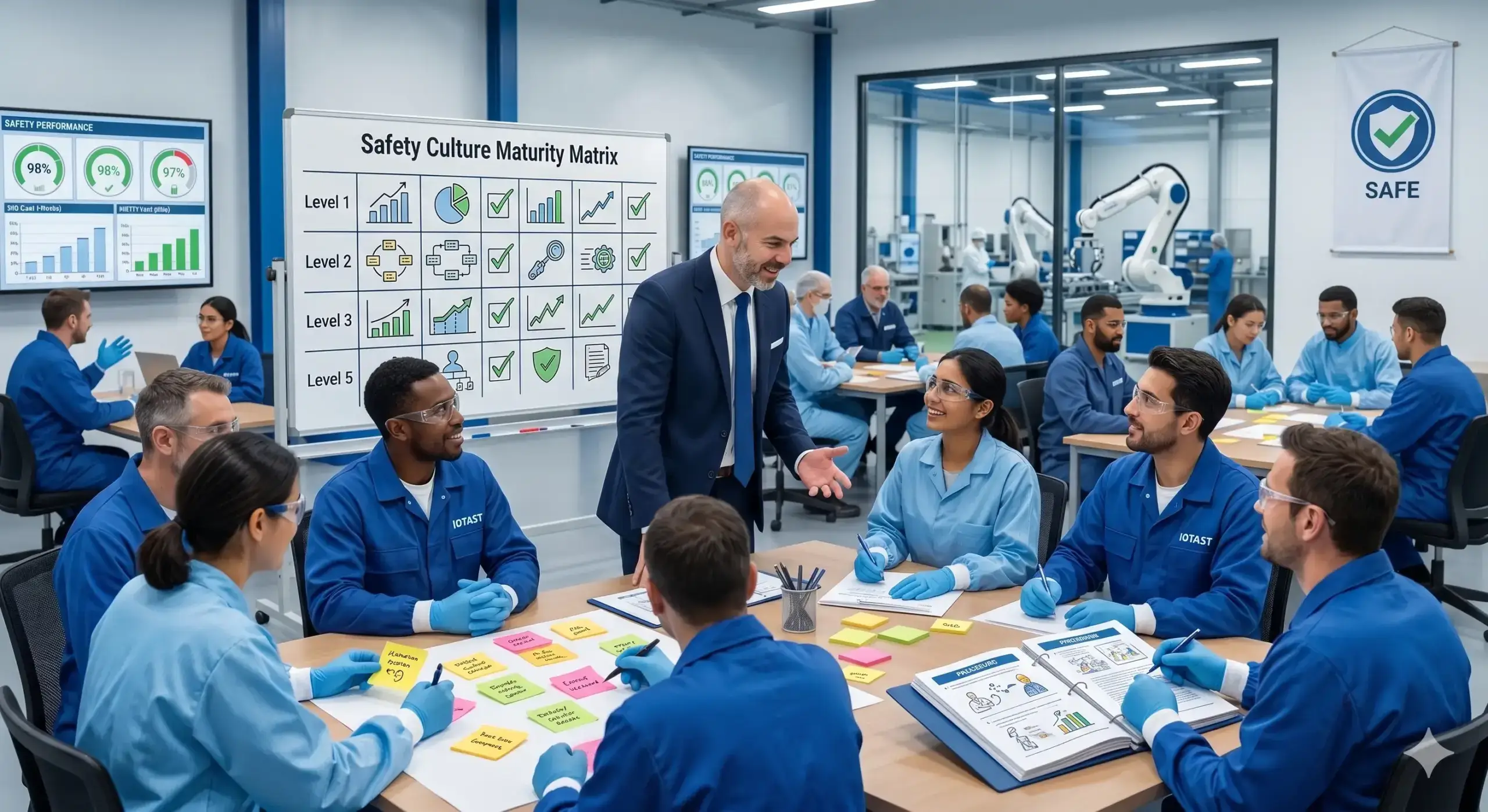
Safety culture exists on a spectrum, described by the Bradley Curve:
Level 1 — Reactive
“Safety is not really important until someone gets hurt.”
Accidents are seen as inevitable.
No formal safety management system.
Level 2 — Dependent
“We follow the rules because we have to.”
Safety is enforced by supervision.
Compliance without understanding or commitment.
Level 3 — Independent
“I value safety for myself and work safely even when no one is watching.”
Individual safety awareness and ownership.
Level 4 — Interdependent
“We care about each other’s safety and hold each other accountable.”
Collective responsibility and genuine safety culture.
Most industrial organizations operate at Level 1 or Level 2. The goal is Level 4.
The journey from Level 2 to Level 4 typically takes 3-5 years of consistent leadership and systematic investment.
7 Proven Strategies to Build Genuine Safety Culture
Strategy 1: Make safety visible in leadership behavior
The single most powerful signal of safety culture is what leaders do, not what they say.
If production managers stop a line for safety and are supported by senior leadership for doing so, every operator notices. If production always overrides safety concerns, every operator notices that too.
Strategy 2: Create psychological safety for reporting
Near misses are early warning signals of future accidents. Organizations where workers fear punishment for reporting near misses have invisible risk, risk that accumulates until it becomes an incident.
Build a reporting system where near misses are celebrated, not investigated for blame.
Strategy 3: Involve workers in risk assessment
Workers know the hazards of their jobs better than any safety officer.
Involving operators in hazard identification and risk assessment produces better results and builds deeper ownership of safety standards.
Strategy 4: Connect safety to personal values
The most powerful safety conversations are not about company policy, they are about why each person personally wants to go home safe. Family. Health. Future plans. Personal dignity.
When safety connects to personal values, compliance becomes commitment.
Strategy 5: Make safety conversations daily
Not just in Monday toolbox talks, but in every shift start, every team meeting, every GEMBA walk.
Safety must be as normal a topic as production targets and quality results.
Strategy 6: Recognize safe behavior publicly Most safety programs only become visible after accidents.
Build a recognition system that celebrates safe behavior, near-miss reports and safety improvement ideas publicly and regularly.
Strategy 7: Measure leading indicators not just lagging
Accident rates tell you what went wrong.
Leading indicators near-miss reports, safety observations, training completion, audit scores; tell you where you are heading.
Organizations with strong leading indicator programs have significantly fewer accidents.
The Role of Middle Management in Safety Culture
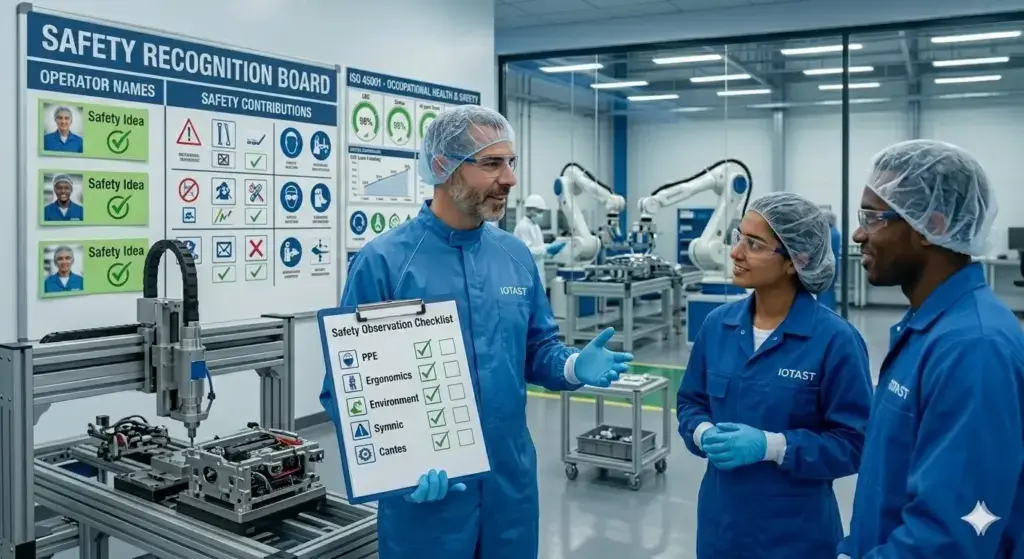
Senior leadership sets the vision. Operators deliver the behavior. Middle management is the critical link between them.
Team leaders and production supervisors make the daily decisions that define safety culture:
- Do they stop a line for an unsafe condition?
- Do they allow shortcuts under production pressure?
- Do they respond to near-miss reports immediately or leave them on the table?
- Do they conduct genuine safety observations or tick the compliance box?
Investing in safety coaching and development for middle management is the highest-return safety investment most organizations can make.
Ready to Transform Your Safety Culture?
Building genuine safety culture requires expertise, consistency and patience.
I work with organizations to assess their current safety culture, design targeted improvement programs and coach the leadership behaviors that create lasting change.
Let’s start the conversation.