
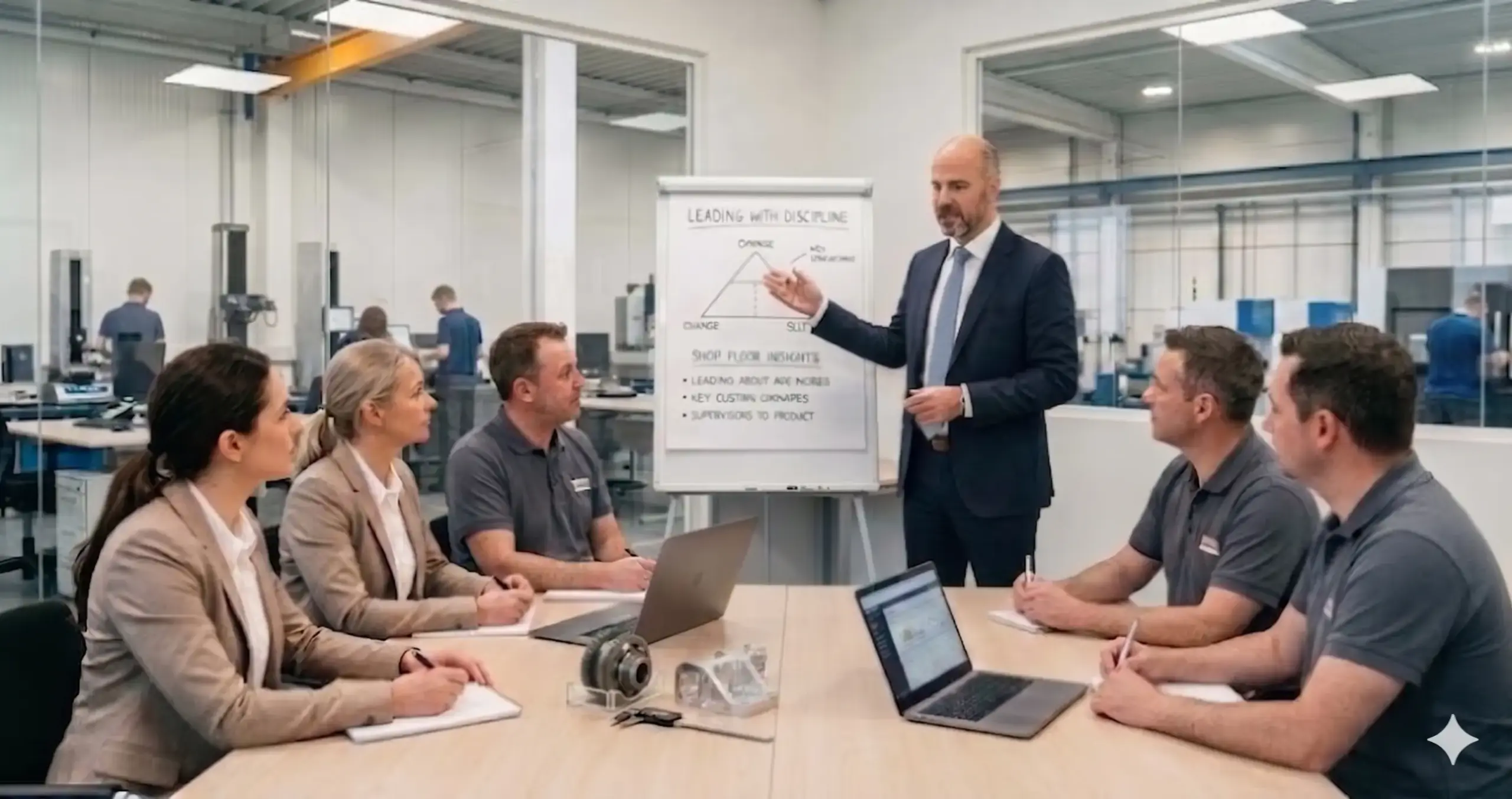
Introduction
I did not learn discipline from a book. I learned it from factory floors, from shift rotations, from production targets that did not care about your mood, and from teams that needed you to show up fully, whether you felt like it or not.
The shop floor is one of the most honest environments in the world. Performance is measured in real time. Problems are visible immediately. There is nowhere to hide behind a meeting or a report. You either delivered or you did not. And that environment, demanding, transparent, and unforgiving of inconsistency, shaped everything I believe about what discipline actually is and how to build it.
Discipline Is a System, Not a Feeling
The most common misunderstanding about discipline is that it is a character trait, something you either have or you lack. In my experience on the shop floor, discipline is a system. It is the sum of your routines, your environment, your commitments, and your accountability structures.
I have managed people who were chronically late, not because they were undisciplined, but because their morning routines lacked structure. When we worked together to standardize their pre-shift preparation, the same way we standardize machine setup, the lateness disappeared. The person did not change. The system changed.
If you struggle with discipline in any area of your life, the question is not what is wrong with you. The question is what is wrong with your system.
The Shift Mentality; Showing Up Regardless
In manufacturing, the shift starts whether you are ready or not. The line does not wait for you to feel motivated. Production targets do not adjust for your energy levels. The discipline that a shift environment builds is the discipline of showing up at full capacity regardless of your internal state.
This sounds brutal, but it is actually liberating. Once you accept that showing up is not optional, that it is simply what you do, you stop negotiating with yourself about whether to do the work. The decision is already made. The only question is how well you will do it.
The most disciplined leaders I have met are not people who feel more motivated than others. They are people who have removed the decision about whether to show up from their daily consideration. It is not a choice. It is a standard.
Consistency Matters More Than Intensity
A machine that runs at 80% capacity every day produces more than one that runs at 100% two days per week and breaks down the other five. This is obvious in manufacturing. It is somehow not obvious to most people when applied to their own performance.
I have seen leaders launch intense self-improvement campaigns, extreme early mornings, aggressive reading targets, brutal exercise routines, that collapse within three weeks because they were designed for motivation, not sustainability. The standard they set was incompatible with the life they actually lived.
The discipline that builds something lasting is not intense. It is consistent. A 30-minute reading habit sustained for two years produces more intellectual development than a month of aggressive reading followed by nothing.
The Role of Environment in Sustaining Discipline
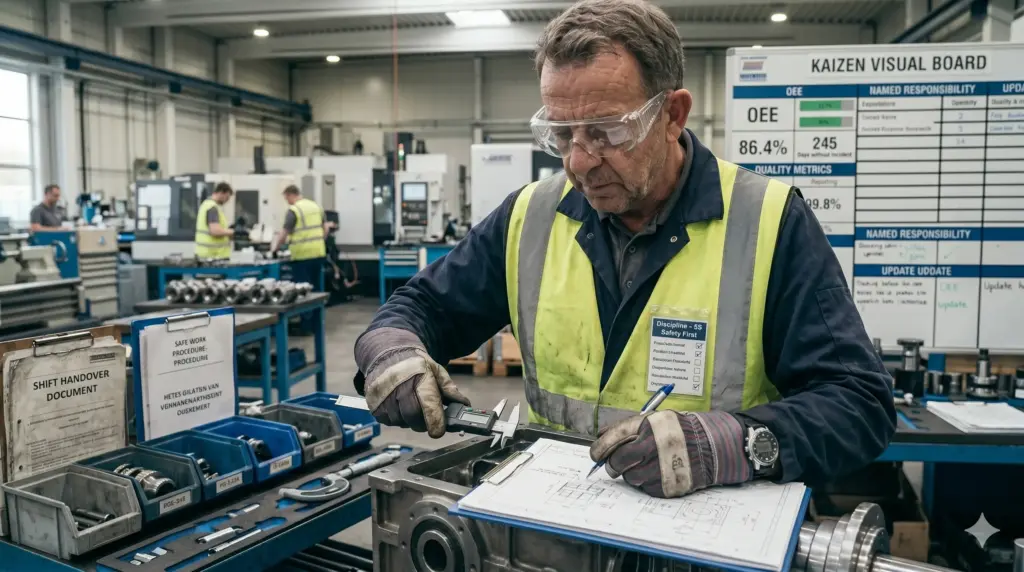
In lean manufacturing, we design the workspace to make the right action easy and the wrong action difficult. We put tools at the point of use so that operators do not have to walk to find them. We use shadow boards so that a missing tool is immediately visible. We arrange materials so that the correct sequence is the natural sequence (5S).
The same design principle applies to personal discipline. If your books are not visible, you will not read. If your exercise equipment requires effort to access, you will not use it. If your planning notebook is in a drawer, you will not plan.
Design your environment so that your disciplined behaviors require less effort than your undisciplined ones. This is not a hack. It is applied systems thinking.
Accountability Is Not Optional
Every high-performing manufacturing plant has accountability structures built into daily operations. Shift meetings. KPI boards. Leader standard work. These are not bureaucracy. They are the mechanisms that make discipline visible and sustainable.
Personal discipline without accountability is fragile. The leader who commits to a development goal without telling anyone, without measuring progress, and without a regular review is relying entirely on internal motivation, the least reliable source of sustained behavior change.
Find your accountability structure. A peer who checks in weekly. A coach who reviews your progress monthly. A public commitment on LinkedIn. The format matters less than the function: someone or something that makes your consistency or inconsistency visible.
What the Shop Floor Cannot Teach You
The shop floor builds a particular kind of discipline: operational, consistent, systems-driven. But there is a dimension of discipline that does not build naturally: the discipline of reflection.
Production environments reward speed and decisiveness. They punish for stopping to think. The discipline of a manufacturing leader must eventually include the courage to slow down, to sit with uncomfortable questions, to examine the quality of your thinking rather than just the speed of your action.
The most complete leaders I have worked with are those who combine operational discipline, showing up, delivering, maintaining standards, with reflective discipline: the regular practice of examining what they are doing and why.
Conclusion
Discipline is not a personality trait. It is a designed system of routines, environments, and accountability structures that makes the right actions easy. The shop floor taught me this by making it impossible to ignore when the system was wrong.
Apply the same design thinking to your own life. The results will be just as measurable.