

Introduction
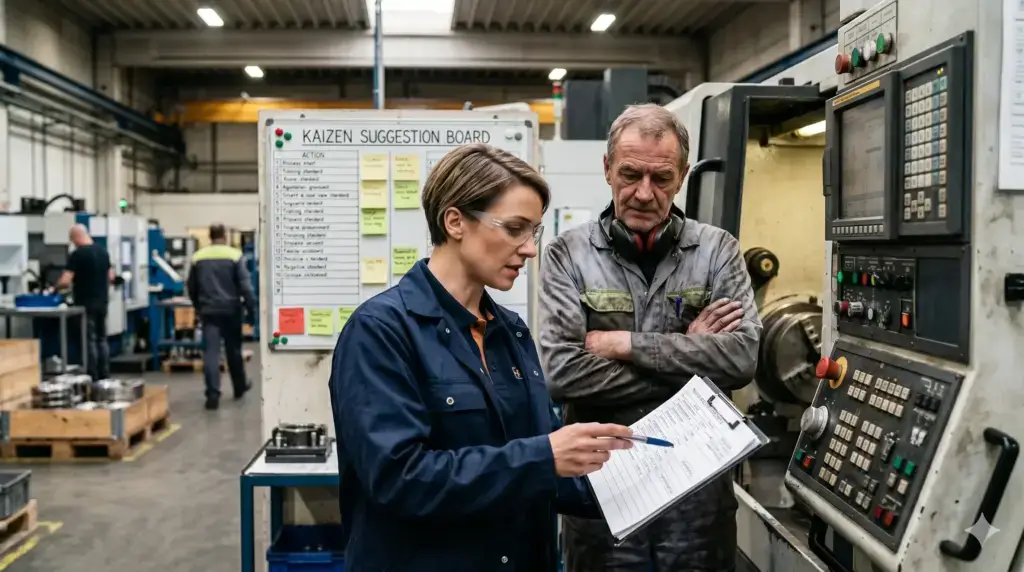
Every leader who has tried to implement change in a manufacturing environment has faced it. You arrive with a plan. You have the data. You have management support. And the team looks at you with that particular expression, arms folded, polite on the surface, resistant underneath, and you realize that the technical solution is the easy part.
Resistance to change is not irrational. It is the predictable, logical response of people who have seen initiatives come and go, who have been given promises that were not kept, and who have learned that the safest response to anything new is to wait it out.
After 23 years of driving change on shop floors, I have learned that resistance is not the enemy. It is information. And the leader who knows how to read it and respond to it will succeed where others fail.
Why Resistance Is Not What You Think It Is
Most leaders treat resistance as a communication problem. If they can just explain the change better, show more data, or get more senior sponsorship, the resistance will dissolve. This is wrong in most cases.
Resistance to change in manufacturing teams is almost always rooted in one of 3 things:
- Fear of loss (status, competence, relationships, routines),
- lack of trust (in the process, in the leader, in the organisation),
- Or a genuine belief that the change will not work or will make things worse.
None of these are communication problems. They are relationship problems, credibility problems, and sometimes legitimate technical concerns that the leader has not properly addressed. Responding to them with more PowerPoint slides is the leadership equivalent of turning up the volume when someone does not understand you.
The First Step: Listen Before You Lead
Before the second meeting about your change initiative, hold one-on-one conversations with the three or four people most visibly resistant. Ask them a simple question: what concerns do you have about this that you have not said out loud in the group?
Then listen without defending. Without explaining. Without countering. Just listen and take notes.
What you will hear in those conversations will reshape your implementation plan, expose risks you had not considered, and most importantly signal to your most resistant people that their perspective matters. That signal alone reduces resistance by 30% to 40% in my experience. People do not resist leaders who genuinely listen to them. They resist leaders who perform listening while waiting to talk.
Make the First Win Visible and Fast
Resistance feeds on uncertainty. The longer a change initiative runs without visible results, the more the sceptics feel vindicated and the more the undecided people drift toward resistance.
Identify the smallest possible improvement that your initiative can demonstrate in the first two weeks. Not the biggest goal. The smallest convincing proof. Run a micro-Kaizen event. Improve one workstation. Reduce one process step. And make the result visible on the shop floor immediately, on a board, in a team meeting, or in a conversation.
When people see that change produces a real, tangible, positive result in their immediate environment, the nature of resistance changes. It shifts from ideological opposition to practical questions. And practical questions are ones you can answer.
Separate the Types of Resistance
Not all resistance looks the same and not all of it should be handled the same way.
The vocal opponent is the person who publicly challenges the initiative in meetings. This person is actually your ally, because they make the resistance visible and discussable. Engage them directly, acknowledge their concerns publicly, and involve them in solving the problems they identify.
The silent saboteur is the person who agrees in meetings and undermines quietly. This is the most damaging type of resistance. The solution is transparency, making progress visible and measurable so that passive resistance becomes obvious and addressable.
The worried follower is the person who wants the change to work but is afraid of failing in the new system. This person needs reassurance, training, and permission to make mistakes. They will become your strongest supporters once they succeed.
The Role of Credibility in Overcoming Resistance
In manufacturing environments, credibility is earned on the floor, not in the office. The leader who walks the line, who knows the process, who can have a technical conversation with an operator, not just a manager, faces far less resistance than the one who manages from a distance.
Before launching any significant change initiative, spend time in the area. Not inspecting. Not auditing. Just observing and asking questions. Let people see that you understand their work before you start changing it. The investment of two or three hours on the floor before a project launch pays back tenfold in reduced resistance during implementation.
When Resistance Is Actually Right
Sometimes the team is pushing back because the plan is genuinely flawed. The most important skill a change leader can develop is the ability to distinguish between resistance rooted in fear and resistance rooted in insight.
If three experienced operators independently raise the same concern about a proposed process change, that is not resistance to manage. That is the engineering input to integrate. The leader who can tell the difference and has the humility to adjust the plan when the team is right builds the kind of trust that makes every future initiative easier to implement.
Conclusion
Resistance is not a problem to overcome. It is a signal to interpret.
The manufacturing leaders who drive the most lasting change are not the ones with the most authority or the most compelling presentations. They are the ones who take resistance seriously, address its real causes, and build trust one visible result at a time.